Rummy Comparison: One Strong Group Versus Several Loose Links

Early in a rummy hand, you may face a choice between keeping one strong group and preserving several loose links. The strong group offers certainty and reduces mental clutter. Loose links can create more future routes, but they may also remain unfinished while the hand accumulates risk. Neither structure is always best. The correct comparison depends on the rules, the number of cards, and the cost of waiting.
First identify what the strong group accomplishes. If it is a required pure sequence, its value is more than emotional comfort: it satisfies an important structural condition. If it is merely a pair, it may be less secure than it looks. Check whether keeping it prevents you from separating high cards or using a joker efficiently. A group is strong because it solves a problem, not simply because it contains matching cards.
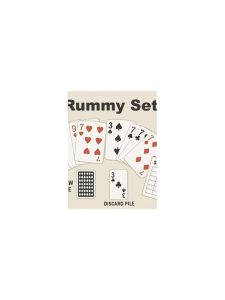
Now map the loose links. For every link, name the exact cards that would help and whether the card has one route or two. A same-suit seven and eight have a direct connection, while a scattered pair may need several events. Write down how many cards would be affected if one link improves. Broad improvement is valuable, but only when it is plausible under the visible information.
Consider timing. If a decision is late in the hand, a secure group often deserves extra weight because there may not be enough turns to complete multiple links. Earlier, a loose structure can be acceptable if it gives you a controlled way to test alternatives. Set a review point rather than holding every possibility indefinitely. At that point, discard the link that has produced the least evidence.
Finally compare the two structures by next-action clarity. Which hand makes your next draw and discard easier to evaluate? A strong group with two isolated high cards may be less comfortable than a loose hand with a clear low-risk route. Review the choice without using the eventual result as proof. Your aim is to learn which structure keeps options real, manageable, and consistent with the format’s requirements.
One useful test is to describe the next two turns for each structure. You do not need to predict exact cards. Instead, name the kind of improvement each hand would welcome and the discard you would probably make if it did not arrive. The structure that gives you a clear response to both outcomes may be preferable to one that looks richer but leaves you unable to explain the next action. Clarity is a practical form of flexibility.