Rummy How-To: Explain a Discard in Ten Seconds
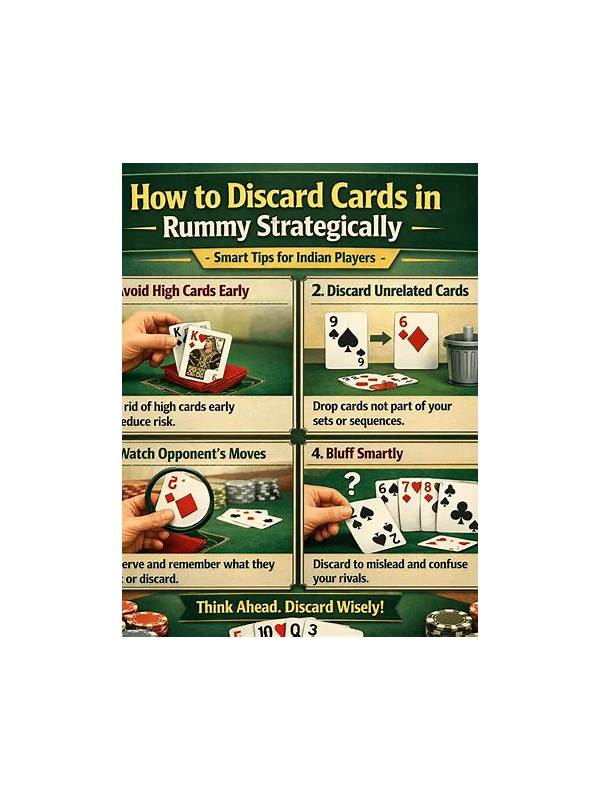
Why explain it?
Explaining a discard does not make the discard correct, but it reveals whether your reasoning is specific. Long explanations often hide several competing ideas. A ten-second explanation encourages you to identify the card’s current job, the route you are choosing, and the cost you accept by releasing it.
Use a three-part sentence: “I release this card because it is ___, I keep that route because ___, and I accept ___.” For example, you might say that a card is isolated, the selected route needs only one connection, and the cost is losing a possible set. The sentence is not for performance; it is a compact check before acting.
Focus on current evidence
Do not explain a discard with a story about what you hope will happen many turns later. Mention the visible hand structure and the number of realistic improvements. If a card belongs to two weak routes, say that both routes require several precise draws. If a card has no connection at all, say that its current job is only to be held.
The explanation should also acknowledge uncertainty. Words such as likely, possible, and temporary are useful. They prevent a flexible card from being treated as guaranteed value. If you cannot finish the sentence without saying “maybe” several times, that may be a sign to choose the simplest discard among the weak options.
Use it in review
During practice, write the ten-second explanation before discarding. After the hand, compare it with the outcome. Do not judge the explanation solely by whether you won. Ask whether it represented the information available at the time. A good explanation can lead to an unlucky result, while a vague explanation can accidentally lead to a win.
If your explanations repeatedly mention the same problem, such as too many waiting cards or forgotten point value, create a small checklist for that issue. Over time, the spoken sentence becomes an internal habit. Clear language helps you keep decisions proportional, especially when the table feels fast.
Keep the explanation private if the table is competitive. The exercise is for your own reasoning, not for broadcasting your plan or inviting debate during a timed turn. In a friendly practice session, you can discuss it afterward, but avoid using the explanation to pressure another player or justify an action after the fact. The best test is whether you could write the same sentence before seeing the next card.