Rummy FAQ: When Is a High Card Worth Holding?
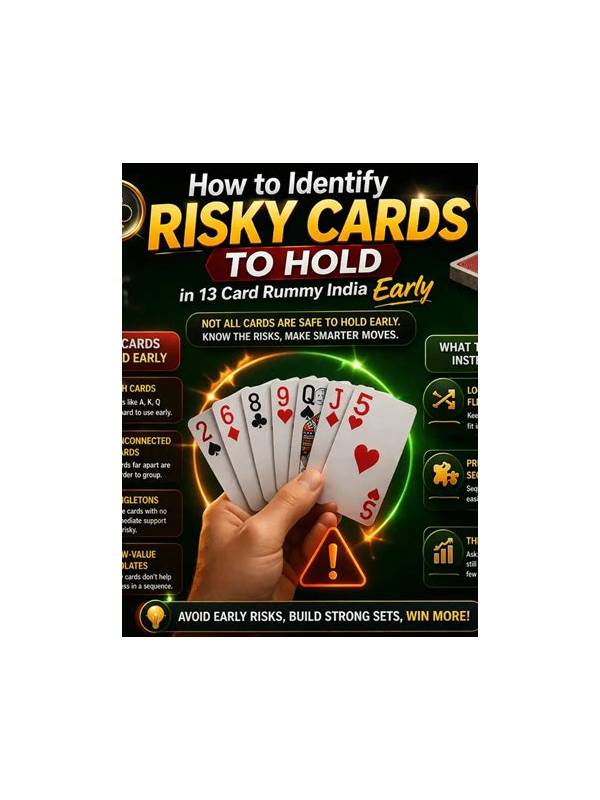
High-card decisions are easiest when you separate current value from future value. Current value comes from a group or connection already present. Future value comes from cards that might arrive. Give more weight to current value when the hand is urgent, and allow future value more room early in the game. This prevents a beautiful possibility from receiving the same confidence as a structure that already exists.
High cards are often discarded first because they can carry a larger penalty. That is a useful default, not an absolute law. A high card may be worth holding when it is part of a credible sequence, supports a set, or preserves a better route than the available low cards. The key is to make the card’s job explicit. If you are holding it only because a perfect future draw is possible, its risk is probably understated. If it supports several realistic outcomes, the penalty may be justified for a while.
Check structure before value. A connected high card with a neighboring card has a clear purpose. An isolated high card has to justify its cost through another strong feature, such as being one of two cards needed for a set. If you cannot identify a route, it should usually be a leading discard candidate.
Next, consider how many useful cards remain. A high card in an open-ended sequence can have more value than a low card that has only one narrow connection. Count practical outs rather than judging by rank alone. Also look at the discard pile and visible actions. If the relevant neighbors are unavailable or opponents appear to be collecting them, the high card’s value falls.
Timing changes the answer. Early in the hand, you may keep a connected high card while waiting for information. Late in the hand, penalty risk and declaration speed become more important. If the card is not close to a legal group by the time the hand becomes urgent, release it even if the original route looked elegant.
Compare the high card with the lowest-cost alternative. Sometimes discarding a low card breaks a flexible bridge, while releasing the high card leaves a safe pair intact. Sometimes the opposite is true. Use the whole hand, not a single rank, as the unit of analysis.
In practice, ask: “What does this high card do now, and what is the cost of waiting?” A concise answer makes the decision easier. The aim is not to fear high cards, but to make them earn their place through real structure and timely improvement.