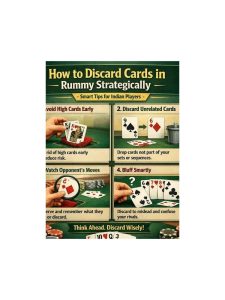
Rummy Guide: Use a Three-Stage Discard Review
When a discard feels difficult, use three stages instead of comparing every possible arrangement. First check legality: does removing the card break a confirmed group or leave a declaration requirement unmet? A beautiful-looking hand is irrelevant if the resulting structure cannot be declared under the format’s rules.
Second check future value. For each candidate discard, ask how many useful groups the card could still join and how many routes the remaining cards retain. A card that is currently loose but highly flexible may deserve another turn. Conversely, a card in a tempting pair may be less valuable if the pair has no realistic continuation. Keep this comparison grounded in visible information.
Third check exit risk. If your preferred draw does not arrive, can you release the candidate without creating a larger problem? High-risk discards often belong to plans that require several exact cards. Before committing, name a backup discard and a deadline for abandoning the route. This prevents one hopeful connection from controlling the entire hand.
The review should be brief. Give the legality stage priority, then compare only the two or three most plausible candidates. In a timed table, a complete but slow analysis can create its own error. With practice, the order becomes a mental checklist: legal shape, future routes, safe exit.
After a session, record one discard where the three stages changed your choice. If the method felt too slow, shorten the language rather than skipping a stage. A clear review does not guarantee a good draw, but it separates a reasoned decision from a guess and makes later practice much more useful. The first stage also includes a quick card count. A visual grouping can hide one extra card or leave a required card unassigned. Count before you commit, especially after rearranging a hand on a small screen. If the count is wrong, stop the review and correct the layout before judging any candidate discard.
Over time, compare your predicted exit risk with what actually happened. Do not score yourself solely by whether the discard lost. Score whether the reasoning used the information available at the moment. This distinction keeps random outcomes from replacing sound decision practice. If a candidate passes the first two stages but has no safe exit, lower its priority. A discard decision is partly about limiting future damage. This final check is particularly useful when a hand contains several attractive pairs that compete for the same missing card.