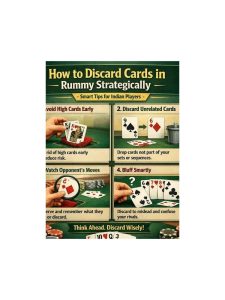
Rummy How-To: Audit the High-Point Cards in Your Hand

An audit of high-point cards is a practical mid-hand habit. It does not mean discarding every high card immediately. It means identifying which cards are protected by a credible group and which are adding risk without a clear route.
Begin by listing the high-point cards that are not part of a confirmed group. For each one, name its best realistic home. A card may fit a short sequence, connect to a pair, or have no useful relationship at all. Avoid calling a card “safe” merely because it could theoretically connect to many cards; the connection must fit your remaining hand and the rules.
Next, compare the cost of waiting. If the card is valuable but isolated, each turn spent holding it preserves a possibility while increasing exposure. If it is part of a strong near sequence, waiting may be reasonable. Write a review point such as “reassess after two draws” so hope does not become an endless plan.
Then examine the replacement card. A discard should not be judged only by the points removed. It should also improve the shape of the hand or protect a required group. Removing a high card while taking on another isolated high card may create the appearance of progress without changing the underlying risk.
Keep the audit short. A long calculation can distract from the current turn. Use three labels—protected, promising, and exposed—and revisit only the exposed cards first. This keeps the method useful at a quick table.
The high-point audit is a decision aid, not a guarantee. It helps you see where the hand is vulnerable so you can choose with clearer priorities. Combine it with rule awareness, a session limit, and the willingness to stop when decisions become rushed. The audit is especially useful after taking a card from the visible pile. That choice may improve one group while leaving a different high-point card exposed. Recheck the whole hand instead of assuming that a helpful draw solved the main problem. A change in one group can change the priority of every loose card.
Do not use the audit to justify panic. Some high cards are protected by a strong route and do not need immediate action. The method simply puts attention where the cost of waiting is most visible. Make the decision, note the review point if needed, and return to the next turn.
You can repeat the audit after a major change, such as taking a visible card, breaking a pair, or completing a required group. Those moments can move a card from exposed to protected or the reverse.