Rummy FAQ: Is a Bigger Group Always a Better Group?
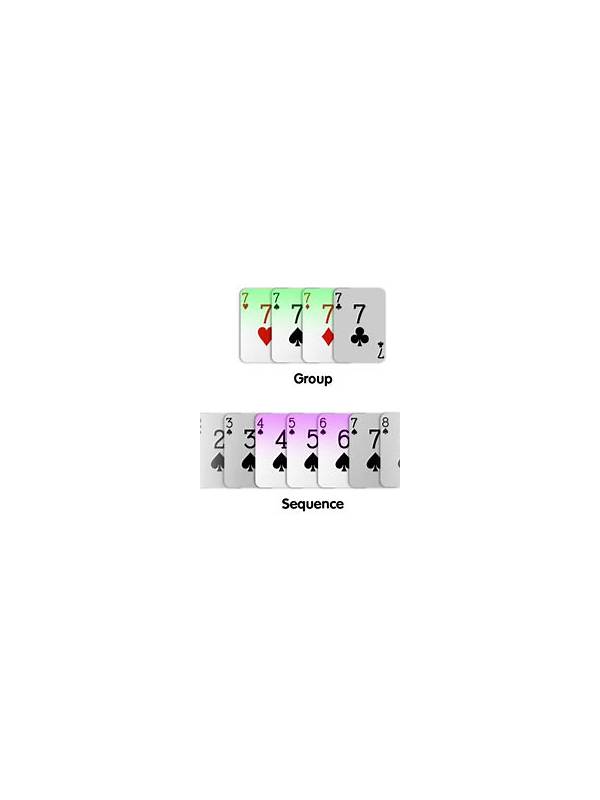
A bigger group looks impressive because it occupies more cards, but size alone does not make it the best use of a hand. A long sequence may be stable and valuable, or it may tie up cards that would complete a more important requirement elsewhere.
Check the rules first. Some formats recognize a group only within a particular length or structure, while others allow extra cards to be attached. A group that appears complete in your layout may still fail a declaration requirement. Never evaluate size without confirming what the table accepts.
Then examine flexibility. A group with several natural cards may be easy to protect, but extending it could require a very specific draw. A shorter group may leave a middle card available for another route. Ask how many useful cards the group can accept and what happens if none arrives in the next few turns.
Consider the rest of the hand as well. If the larger group leaves two high-value cards unrelated, it may be less helpful than two modest groups that reduce the loose-card burden. If it already satisfies a required condition, preserving it may be sensible. If it merely looks neat, do not let appearance decide.
The best group is the one that supports the hand’s current objective. Recheck that objective after a major draw or discard. A larger group can be an anchor, a temporary shelter, or a distraction. Its value comes from how it fits the complete hand, not from the number of cards placed beside one another.
Also check whether the group is easy to verify. A visually long arrangement can be hard to inspect if it crosses several possible boundaries or depends on a wild card. A slightly shorter arrangement with a clear identity may reduce declaration mistakes. When teaching a new player, explain the group’s requirement and its role in the hand separately. This prevents “large” from becoming shorthand for “safe” and encourages better questions about structure. When a large group is already secure, leave it alone while evaluating the remaining cards. Reopening a settled group just to make the layout look more balanced can create new uncertainty. When it is not secure, mark the exact condition it needs and set a review point. Size then becomes one fact among several, rather than a reason to stop thinking. When uncertain, describe the group by its rule and purpose rather than its length. That wording makes reviews clearer and helps newer players ask useful questions.