
Rummy Guide: Measure a Hand by Its Best and Worst Routes
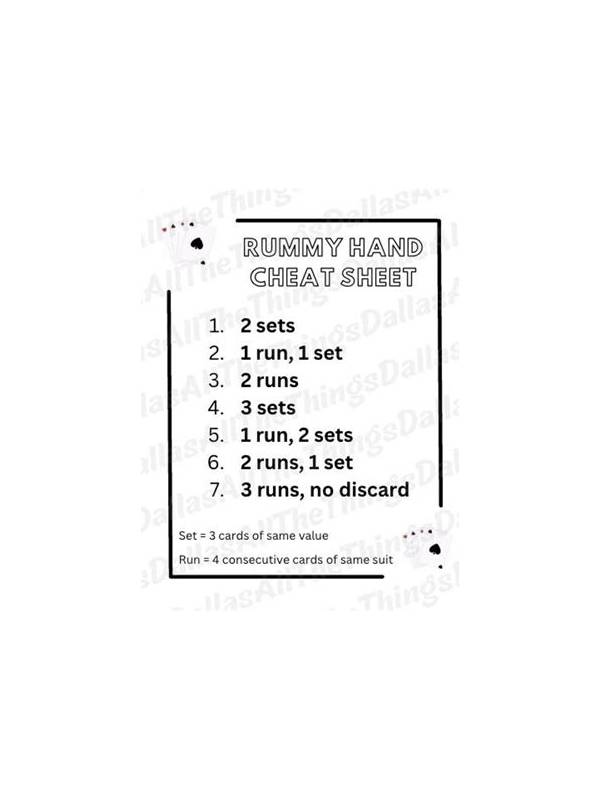
In rummy, a hand can look promising because one route appears close to completion. That view can hide a problem: the route may depend on one exact card, while a less attractive arrangement may have several ways to improve. A useful review therefore compares both the best route and the worst route before you commit.
Start by listing the groups you can already see. For each possible sequence or set, write the cards still needed. Keep the list short and concrete. “Needs a middle card” is less useful than “needs either the seven or nine of this suit.” The aim is to identify the number and type of cards that could help, not to predict what will happen.
Next, inspect the best route. Ask how many helpful cards exist and whether the route preserves a second option if the next draw misses. A route with two possible connectors may be stronger than a route that appears one card away but has only one live card. Also consider whether completing it would leave a high-value card stranded elsewhere.
Then study the worst route. Imagine that the next few draws do not cooperate. Which cards become difficult to use? Does the plan force you to hold several points while waiting? Does it require breaking a group that is already useful? A plan is more resilient when a miss costs one decision rather than changing the entire hand.
Use the comparison at the moment of drawing and discarding. If a route has a good ceiling and a manageable floor, it can justify patience. If its best outcome is attractive but its worst outcome leaves multiple isolated cards, set a deadline or switch to a broader arrangement. This method does not guarantee a win; it gives uncertainty a visible shape.
Finally, record the comparison after the hand. Note what you believed the best route was, what the risky route required, and when the evidence changed. Over time, these notes reveal whether you regularly overvalue near-complete patterns or abandon flexible ones too early. Measuring both routes turns a vague feeling of promise into a practical decision. Finally, record the comparison after the hand. Note what you believed the best route was, what the risky route required, and when the evidence changed. Over time, these notes reveal whether you regularly overvalue near-complete patterns or abandon flexible ones too early. Measuring both routes turns a vague feeling of promise into a practical decision.
Use the same language each time you review: helpful cards, unresolved cards, and cost of a miss. Consistent terms make comparisons easier across different hands. They also stop a lucky completion from disguising a weak process. The aim is not to calculate exact odds, but to make the shape of the choice visible before the next turn.


