Rummy How-To: Create a Discard Reason Before Drawing
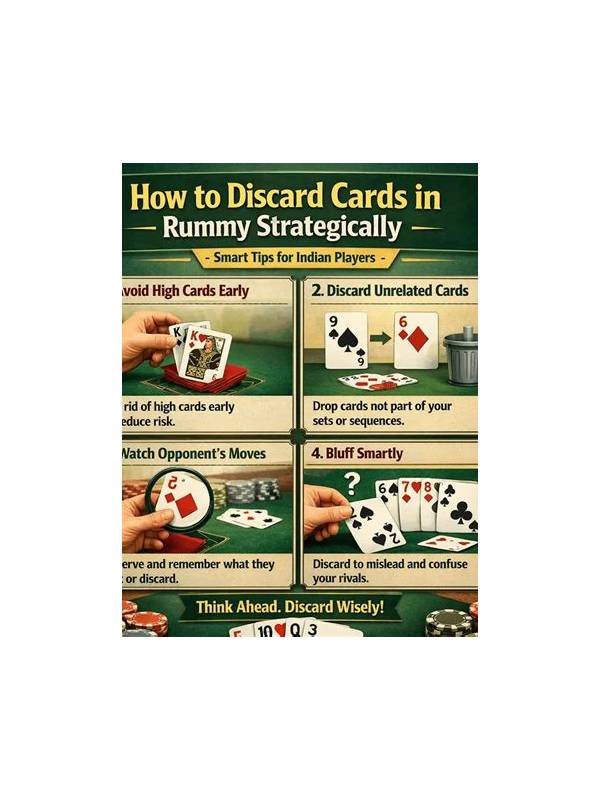
Many discard mistakes begin before the discard itself. A player draws a card, sees a possible improvement, and immediately removes the first card that looks inconvenient. Creating a discard reason before drawing keeps the hand organized and makes the next choice easier to explain.
Before taking a card, identify the group with the least support. This may be an isolated high card, a pair that has missed several chances, or a duplicate that competes with a stronger set. Do not decide the exact discard yet. Decide only which part of the hand is most vulnerable. That small distinction preserves room for the incoming card to change the evaluation.
After drawing, compare the new card with the vulnerable group and with your strongest structure. Ask three questions. Does the card complete a legal group? Does it create two plausible connections? Does it merely look attractive because it is low or high in value? A card that fails all three questions is usually easier to discard than one that offers a real alternative.
State the reason in plain language before acting: “I am discarding this because it has one route and the new card has two,” or “I am removing this high card because it cannot join either confirmed group.” The sentence need not be perfect. Its purpose is to prevent a vague feeling from making the decision.
Check the discard against future information. Avoid throwing a card that would strongly help a visible, repeated pattern unless your own hand has a better reason to release it. At the same time, do not keep a card solely to deny someone else a theoretical improvement. Your hand’s structure should remain the primary test.
After the discard, look once at the remaining groups and confirm that you can describe their roles. A useful hand often has a foundation, a development group, and a few flexible or disposable cards. If every card is being called “important,” the sorting is not finished.
This routine takes only a few seconds, but it creates a record of your thinking. During review, you can ask whether the reason was based on evidence, value, or emotion. Repeatedly improving that reason is more valuable than memorizing a rigid list of cards to discard. The routine also prevents a common reversal: drawing a card and then searching backward for a justification. Decide what part of the hand is weakest before the draw, then allow the new card to challenge that assessment. If it does, revise the reason openly. Flexible thinking is not inconsistency; it is the ability to update a decision when the evidence changes.