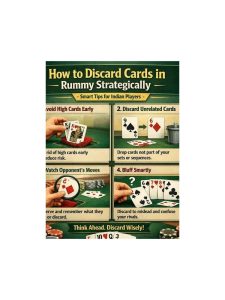
Rummy Strategy: Compare Cards by Their Exit Routes
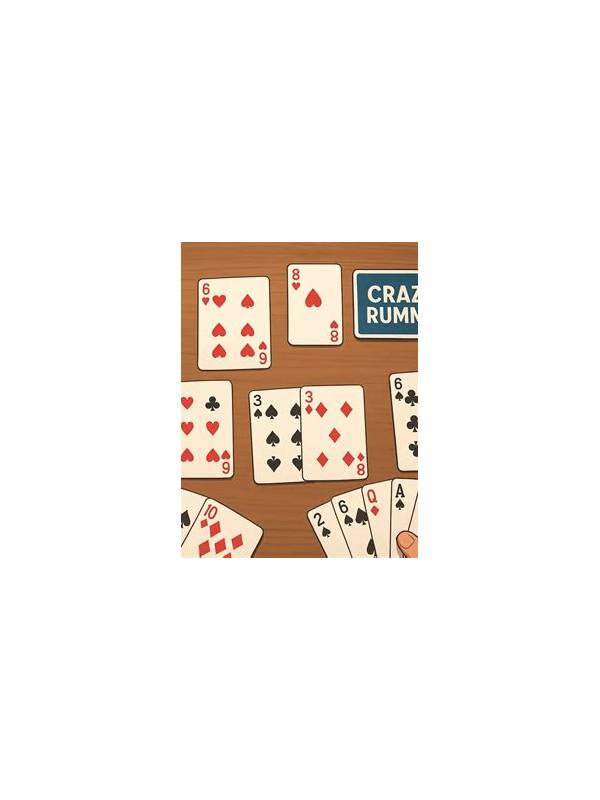
In a rummy hand, a card can look useful simply because it sits beside another card. A better question is what happens if that plan fails. The exit route is the next sensible use for the card: another sequence, a set, or a low-cost discard. Comparing exit routes helps you avoid becoming attached to one attractive possibility.
Start by selecting two ungrouped cards. For each one, list the groups it could realistically join under the current rules. A middle card may have several neighboring ranks in the same suit, while a high singleton may have only one narrow route. Do not count every theoretical combination. If the needed cards are already visible in another player’s discard history or if the route requires several exact draws, mark it as weak.
Next, consider timing. A card with three possible routes is valuable only if you have enough turns to test them. Near the end of a hand, a narrow but immediate connection may be better than broad flexibility. Early in the hand, flexibility usually deserves more weight because new information can change your plan.
Finally, compare the cost of keeping each card. High cards can create a larger penalty when a hand ends unexpectedly. A card that contributes to a strong group may still be a poor hold if it blocks a cleaner arrangement. This is not a mathematical guarantee; it is a disciplined comparison of future choices.
Use the method during practice by writing three labels beside loose cards: “many exits,” “one exit,” or “no clear exit.” Revisit the labels after each draw. A card’s value can change when a needed rank appears, disappears, or becomes less likely. The goal is not to predict the perfect draw. It is to keep your hand adaptable while making each discard easier to explain.
When two cards have similar points and similar routes, choose the one that keeps your groups easier to verify. Clear structure reduces mistakes during a final declaration. Exit-route thinking therefore supports both strategy and accuracy: you preserve useful possibilities without treating every possibility as a promise. One useful refinement is to separate a route’s existence from its quality. A card may technically fit several groups, yet each group may require cards that are unlikely to remain available. Give the route a simple strength rating based on current cards, visible evidence, and time. Recheck that rating after an opponent takes a visible card or after your own draw changes the hand. This keeps the method practical rather than theoretical.
If you are playing for practice, explain the discard in one sentence before making it. If you cannot explain why the card has the weakest exit, sort the hand again and delay the decision briefly. The explanation is a learning tool, not a prediction of the outcome.