Rummy Tips: Treat the Discard Pile as a Timeline
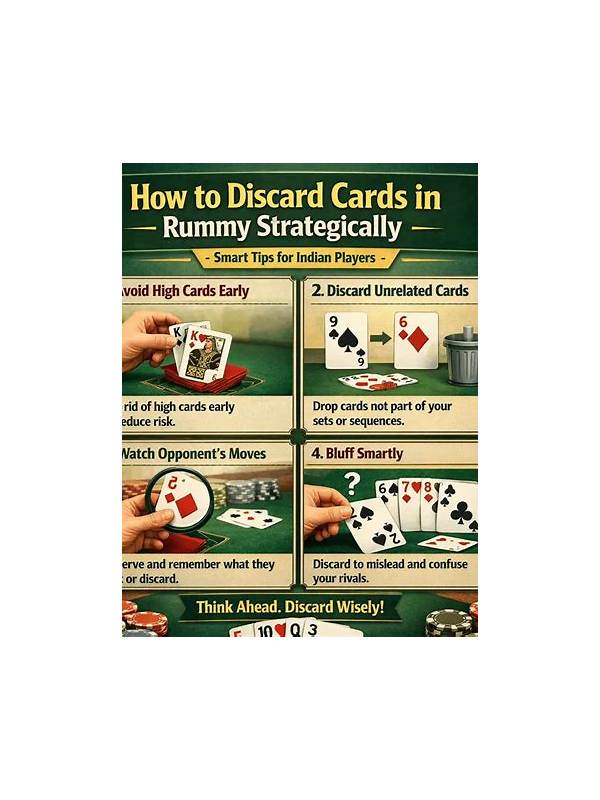
The discard pile is often treated as a menu with one available card. It is more useful to see it as a timeline. Each card records a decision made by someone at an earlier moment: a card was once held, considered, and released. The order of those decisions can help you understand how a hand is developing. This does not require memorizing every card. A short mental snapshot of the newest entries, repeated suits, and unusual gaps is usually enough. When the table becomes busy, preserve the broad pattern and let minor details go. Good attention management is part of good observation.
Start with the newest few cards, but do not stop at the top. Look for changes in suit, rank, and spacing. Several cards from one suit may indicate that a player is avoiding that suit, or they may simply reflect a hand that failed to connect. A sequence of nearby ranks can be especially informative because it shows that connected possibilities have been entering and leaving the game.
Next, separate evidence from speculation. If a player took a visible card and later discarded a neighboring rank, that is useful evidence that the original plan changed. It does not prove what the player now holds. Treat the discard as a clue with a confidence level, not as a secret message with one guaranteed interpretation.
The timeline also improves your own discards. Before releasing a card, consider what story it adds. If you discard a card that connects two common possibilities, another player may gain a convenient entry. If you have already shown interest in a suit by taking from the pile, releasing a different card in that suit can create a misleading or accurate signal. You cannot control every interpretation, but you can avoid giving away information accidentally.
When the pile is long, use a simple three-part note: recent cards, repeated patterns, and uncertain clues. Recent cards matter for immediate availability. Repeated patterns help you judge which regions of the deck are active. Uncertain clues remind you not to overcommit to a theory. This method takes less attention than trying to memorize every discard.
Finally, compare your timeline reading with what actually happens. If you repeatedly assume that a connected discard means a broken sequence, check whether you are using too much certainty. Good discard reading is not fortune-telling. It is a disciplined way to update probabilities while keeping your own hand flexible.