
Rummy How-To: Compare Two Complete Hand Arrangements
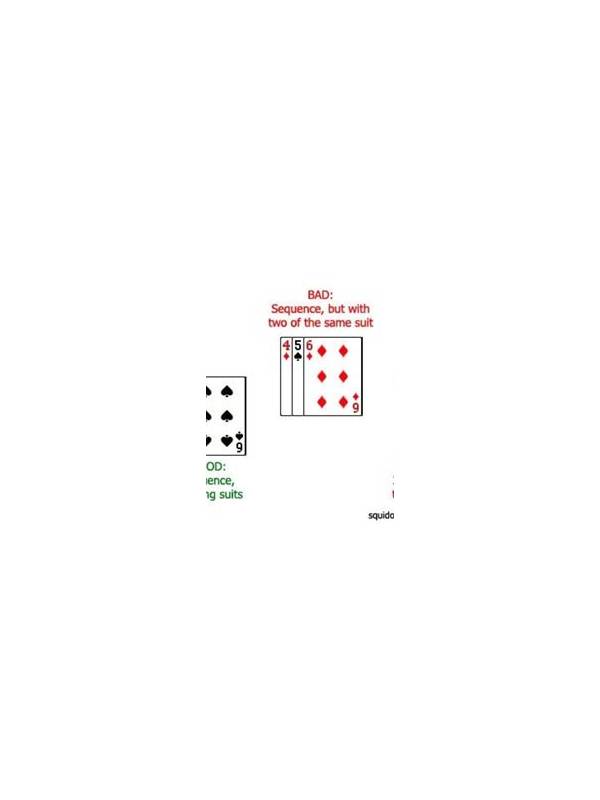
Sometimes the same cards can be arranged in two or more complete-looking ways. One arrangement may contain a cleaner sequence, while another may preserve a stronger group for the next draw. Comparing them systematically helps you avoid choosing only by appearance.
Write each arrangement separately. For each one, mark the required pure or natural sequence first, then label the remaining groups. If an arrangement cannot satisfy the format’s basic requirements, remove it from consideration immediately. There is no benefit in optimizing an invalid layout.
Next, compare the number of assumptions. Arrangement A may be valid now, while Arrangement B may require one particular future card. A current valid structure usually deserves priority, but a flexible unfinished structure can be better early in a hand if it has several realistic completions. Make the assumptions explicit rather than calling one layout “more promising.”
Check discard consequences. If selecting one arrangement leaves a high-value isolated card, note that risk. If another arrangement uses the same card in a group and leaves a low-cost spare, it may be safer even when the visual pattern is less elegant. A hand is judged by what remains outside the groups as much as by what sits inside them.
Then evaluate future flexibility. Count how many cards could improve each arrangement and whether those improvements overlap. A plan that accepts several useful cards is more resilient than a plan dependent on one exact rank. Also consider timing: near the end of the hand, immediate validity and penalty reduction usually matter more than a distant ideal arrangement.
Finish by choosing a primary plan and a fallback. The fallback should be simple enough to recognize during a fast turn, such as protecting the pure sequence and releasing the highest isolated card. This keeps comparison from becoming paralysis. Practice the method with unranked examples until it is quick: validity, assumptions, leftovers, future routes, then timing.
If the rules allow several equivalent arrangements, favor the one that is easiest to verify at declaration. Fewer moving parts reduce the chance of overlooking a leftover card. You can still change it later if a draw creates a clear improvement, but beginning with a checkable structure gives every later decision a stable reference point.
When two arrangements remain close, prefer the one you can explain in one sentence. A clear plan is easier to update after the next draw and less likely to depend on hidden assumptions. You can keep the other arrangement as a fallback without treating it as equal. Good comparison reduces confusion by ranking choices, not by preserving every possibility indefinitely.


