
Rummy How-To: Mark Cards by Function
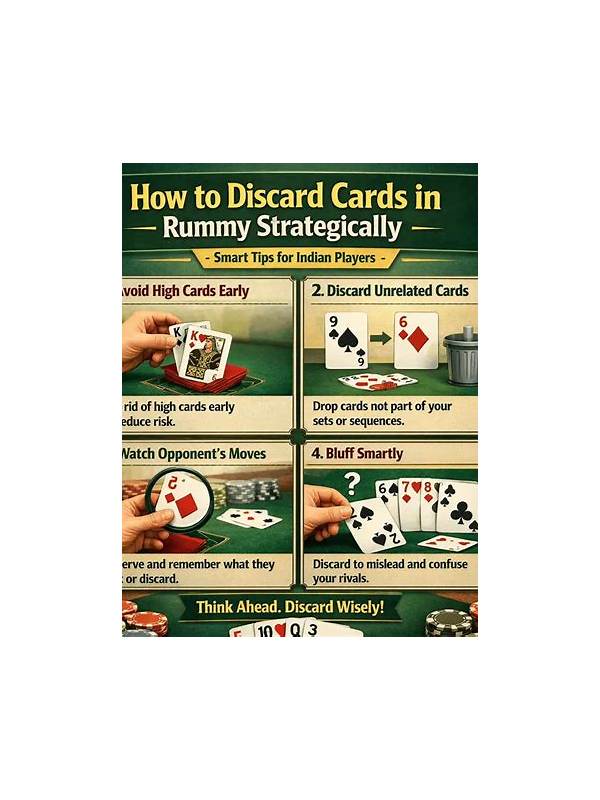
Sorting cards only by suit or rank is useful, but a second layer of organization can make decisions faster. Mark each card by the job it is currently performing: anchor, connector, candidate, shield, or burden. These labels are temporary and should change as the hand changes.
An anchor belongs to a nearly complete legal group. It gives the hand structure and should not be discarded casually. A connector has two or more plausible ways to join a group, such as a middle rank that can work on either side. Connectors are valuable because they preserve options, even when they are not close to completing anything.
A candidate is part of a possible route but needs more evidence. It might be one half of a pair or a card whose suit matches a useful sequence. Candidates deserve a time limit. If they remain candidates after several turns without improving the hand, they may become burdensome. The shield label applies to a card you keep partly because discarding it could provide a strong clue or useful card to an opponent; use this label sparingly.
A burden is isolated, high-value, redundant, or dependent on a narrow event. Burdens are the first cards to compare when choosing a discard. Notice that a card can move between categories. A connector becomes an anchor after a new card arrives. A candidate becomes a burden when its only completion is no longer realistic. This movement is the point of the system: it stops old assumptions from surviving unnoticed.
Use simple marks on paper or in your mental sorting. Do not create a complicated code that takes longer than the decision. A quick scan might look like this: anchors together, connectors beside them, candidates in one small group, and burdens separated from the rest. Before each discard, ask whether the selected card is still a burden and whether another card has lost its function.
Functional labels are especially helpful on small screens or in fast games because they shift attention from appearance to purpose. They also make post-game review easier. Instead of saying “I liked that card,” you can ask whether it was an anchor, a connector, or merely a candidate that never improved. That vocabulary turns a vague hand into a series of observable decisions.
Keep the labels private and practical. They are a thinking aid, not a claim about what another player can see. If a label requires a long explanation, simplify it. The strongest system is one you can apply during a normal turn, remember after a pause, and use consistently enough that your later review has comparable examples.


