Rummy Strategy: Choose a Review Trigger Before the Hand Gets Crowded

Crowded hands create decision fatigue. Several pairs, loose cards, and possible sequences compete for attention, so players often continue the first plan simply because changing it feels expensive. A review trigger gives you a planned moment to stop and compare the current options.
Choose a trigger that you can observe clearly. It might be the third turn without progress, the arrival of a card that supports a new pure sequence, or the point at which the hand contains more speculative cards than confirmed groups. A trigger should describe a change in evidence, not an emotion such as “when I feel unlucky.”
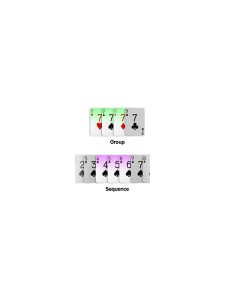
When the trigger appears, clear the hand mentally. Separate confirmed groups from developing routes and orphans. Confirmed groups are protected unless the rules or a major improvement justify change. Developing routes need a demand count. Orphans need either a specific role or a discard review. This separation reduces the chance that an old plan receives automatic priority.
Compare the two best current routes. For each, note the key requirement, number of likely completions, cards at risk, and the next discard it would support. If one route cannot be explained in a sentence, it may be too speculative to keep. If the routes are close, choose the one that leaves more options after the next draw.
After the review, set a new trigger. It can be later in the hand or tied to a new piece of information. Avoid reviewing continuously; a hand needs enough time for a route to show whether it works. The trigger is a boundary, not a command to rebuild everything.
Practice with sample hands by placing a marker at the planned trigger. Write what you would have chosen before and after the review. Over several exercises, you can adjust the trigger to your habits. The objective is not to make every hand elegant. It is to make crowded decisions visible early enough that your choice reflects the current hand rather than an outdated commitment. A trigger can be tied to hand size, time, or attention, but it should not force a bad action. If the interface is unstable or the rules are unclear, pause and resolve that issue first. Strategic review works only when the basic playing conditions are reliable.